

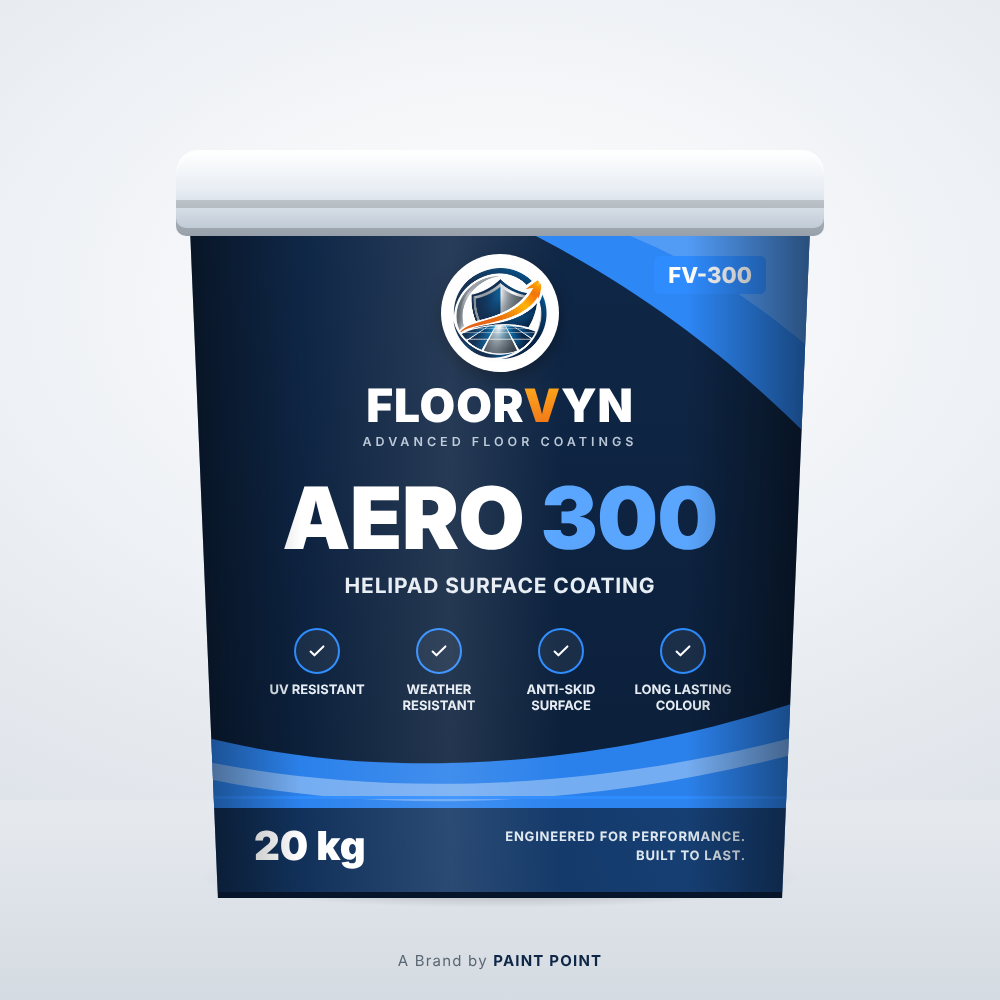
Floorvyn AERO 300 is a helipad surface coating for rooftop and ground-level landing pads. A helipad sits in full sun all day, takes rain, rotor wash and foot traffic, and still needs clear markings and good grip. AERO 300 is made for exactly those conditions.
Why Use a Dedicated Helipad Surface Coating
Ordinary floor paint fades fast on a roof and turns slippery when wet. On a helipad that is a safety problem, not just a looks problem. AERO 300 gives a textured anti-skid finish and keeps its colour under strong UV, so markings stay readable from the air.
In Karachi the sea air, heat and monsoon rain are hard on any exterior coating. AERO 300 is built to handle that cycle of sun and wet weather.
Key Features
- UV resistant: colour holds up in direct sun.
- Weather resistant: handles heat, humidity and rain.
- Anti-skid surface: better grip for crew and passengers in wet conditions.
- Long-lasting colour: clear H, circle and TLOF markings.
- Works with markings: available in the colours used for standard helipad layouts.
Where to Use This Helipad Surface Coating
- Rooftop helipads on hospitals, offices and hotels
- Ground-level helipads at plants and private sites
- Helipad markings: H, aiming circle and edge lines
- Rooftop decks and exterior platforms that need an anti-skid finish
Surface Preparation
The deck is cleaned, ground or blasted, and checked for cracks and ponding. Cracks are repaired and the surface is primed with PRIME 100 epoxy floor primer or a primer suited to the substrate. Markings are set out to the layout and dimensions given by the site or aviation consultant. For background, see this overview of helipads.
How It Is Applied
- Prepare and prime the deck.
- Apply the base colour of AERO 300 with anti-skid aggregate.
- Mask and paint the H, circle and edge markings.
- Inspect the finish and remove masking once cured.
Pack Size and Technical Data
AERO 300 comes in a 20 kg kit. Coverage, aggregate rate and cure time are given in the technical data sheet (TDS). For colour and layout questions, WhatsApp us at 0332-8111360.
Planning the Helipad Markings
The size of the H, the aiming circle and the edge lines depend on the helicopter type and the rules the site follows. We work from the drawing supplied by your consultant or operator, set out the layout on the deck, and then apply the helipad surface coating and markings in the right order so edges stay sharp.
Care and Maintenance
Keep the deck free of sand, leaves and standing water. Wash it with water and a mild cleaner every few months. Fuel or oil spots should be cleaned quickly. Check markings once a year and touch up any worn areas before they fade further.
Things to Check Before You Order
Share the pad size, whether it is on a roof or the ground, the current surface (bare concrete, old paint or membrane) and the marking drawing if you have one. These details tell us how much helipad surface coating is needed and how the deck should be prepared.
Good to Know
Rooftop work depends on the weather. We avoid coating during rain or when the deck is wet from overnight dew, and we plan work for cooler hours in summer so the coating does not cure too fast. Access, lifting of material to the roof and any flight restrictions during work are agreed with the site team before we start.
Helipad Surface Coating FAQs
Can you repaint an existing helipad?
Yes. We check the old helipad surface coating, remove loose areas, prepare the deck and recoat with fresh markings.
Is the finish slippery when wet?
No. AERO 300 is applied with an anti-skid texture so the surface keeps grip in rain.
Can AERO 300 go over a waterproofing membrane?
It depends on the membrane type. We check the existing system on site before recommending a primer and coating build-up.
Do you provide application?
Yes. Paint Point can handle preparation, coating and marking. See our epoxy floor coating service page or contact us for a site visit.
Share your helipad size and location, and we will plan the helipad surface coating and marking work for you.


Reviews
There are no reviews yet.